
In a recent analysis, political analyst Hani Al Masri reflects on the future of the Palestinian national movement in the aftermath of the devastating war on Gaza. He argues that the Palestinian cause, along with the entire region and the world, is entering a new phase, fundamentally different from the era before October 7, 2023. Al Masri contends that the regional and international landscape is in an unprecedented state of flux, with some powers receding and others advancing, and political and security concepts and arrangements changing rapidly, rendering past solutions obsolete.
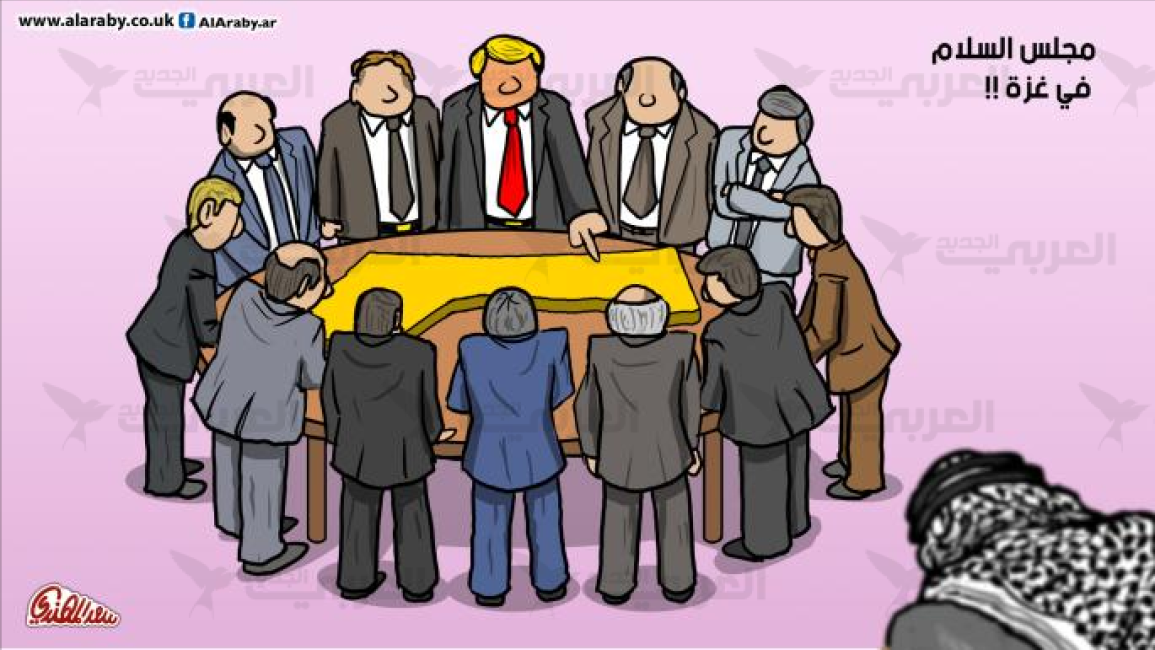
This transformation, Al Masri asserts, is most applicable to the Palestinians and their national movement, which stands at a historic crossroads similar to the periods after the 1948 Nakba and the 1967 defeat, but perhaps even more profound and dangerous. The most significant evidence of this, he writes, is what is being proposed: the liquidation of the Palestinian cause in all its components by forcing Palestinians into a bitter choice: "genocide or apartheid, or a mixture of both." At best, he suggests, the offer is a diminished or slightly altered version of the Oslo Accords, as demonstrated by the plan of former US President Donald Trump, which aims to "save Israel from itself" in the face of growing global isolation and campaigns against it.
Al Masri elaborates on the dangers of the current proposals, which include the formation of a trusteeship council over the Gaza Strip, the disarmament of resistance factions, and the removal of Hamas from power without the return of the Palestinian Authority to Gaza except under "crippling conditions that it cannot meet." He warns that such a plan, if implemented, would entrench the treatment of a "living and authentic part of the Palestinian people in Gaza as individuals whose humanitarian needs are met as long as they accept living under external control, without identity and without national rights." This, he argues, would deepen the separation of the West Bank from the Gaza Strip and could serve as a "rehearsal for its subsequent application in the West Bank, thereby blocking the path to the embodiment of an independent Palestinian state." However, Al Masri maintains that this is not a foregone conclusion and that this path can be thwarted if the Palestinian leadership and the various components of the national movement rise to the historical moment.
Reflecting on the past, Al Masri recalls that after the 1948 Nakba, Palestinians experienced a phase of "displacement and loss," and their cause was treated as a humanitarian issue without a national address. The Palestinian national project expressed itself by raising the slogan of liberation, and many Palestinians joined nationalist, religious, and international movements in search of restoring their rights. This continued until the Fatah movement launched the armed struggle, and the Palestine Liberation Organization (PLO) was established, which "redefined the cause as a national liberation movement, restored the Palestinian identity, and highlighted the importance of the special role of the Palestinian people as the locomotive that leads without neglecting other Arab and international roles." The revolution adopted the project of liberation and armed struggle as a form consistent with the goal and as the sole or main path. The Palestinian revolution reached its peak after the defeat of June 1967, when the defeated Arab regime needed the revolution to cover its impotence and revive the slogan "what was taken by force can only be restored by force."
However, with the recovery of the Arab regimes and the change in their political approach, a process of "containing the revolution and clipping its nails" began, especially after its exit from Jordan and then Lebanon. This coincided with the Arab regime’s transition from the slogan of the "three no's" to the option of "removing the effects of the aggression through settlement and negotiations." The national movement, in order not to be written off, found itself "forced to adapt to regional and international changes, and replaced the slogan of liberation with the slogan of independence, in order to remain a political player." Al Masri laments that this adaptation was not necessary to be done through "harmful illusions and losing bets that led to making concessions and adopting negotiations without holding on to the papers of power and focusing on changing the balance of power on the ground." He believes another path could have led to different results. The movement transitioned from the slogan of "liberation" to the slogan of "independence," which began with the adoption of "national authority on any part that is liberated," leading to the project of a "Palestinian state on the 1967 borders." Over time, armed struggle transformed from a "main option to a mere tactic, before being replaced by negotiations as an almost sole option."
This trajectory culminated in the 1993 Oslo Accords, which were promoted as a "compulsory corridor to the Palestinian state, but in reality, it included and established major concessions in exchange for limited achievements and vague promises." This approach failed at the Camp David summit in 2000, when it became clear that what was required was the "abandonment of refugees and Jerusalem in exchange for a 'maimed state' within the wall and settlements, that is, within 'occupied lands' and not the 'occupied territories'."
After the failure of Oslo and the assassination of Yasser Arafat, a new Palestinian leadership emerged that adopted an approach of "coexisting with reality," "implementing obligations unilaterally," and "withdrawing pretexts," and integrating into the new security and regional system in the hope of "saving what can be saved." With negotiations becoming an end in themselves, the national project shrank to the goal of "preserving the Authority" in the West Bank and the "survival of the leadership."
Al Masri notes that this trend deepened after September 11, 2001, and after the 2002 Arab Peace Initiative, which was not put forward for implementation but rather to "compensate for the participation of Saudis in the events of September." This is evidenced by the fact that it "had no teeth and did not lead to a political process." It offered full normalization in exchange for a full Israeli withdrawal from the territories occupied in 1967. However, the rulers of Tel Aviv, with American support, later reversed the equation to become, during the first Trump presidency, "normalization first." This paved the way for the Abraham Accords and the decline of the collective Arab position in favor of integrating Israel into the region without ending the occupation and without a proportionate political price. The danger, Al Masri warns, is that normalization may resume now (or after a while) if the resistance is defeated, its weapons are removed, and the "consciousness of the Palestinian people is seared," after the guns of war fall silent and the "Peace Council" and "Stabilization Force" begin their work in the Strip. This, of course, is if things go according to the plans of Washington and Tel Aviv, but this scenario is not the only one, and it can be thwarted.
In this context, the Gaza war represented a "revealing moment for the exposure of the Israeli project itself," as it transformed from a project of "occupation, apartheid, expansion, and ensuring superiority and deterrence to a project of displacement, extermination, annexation, and the establishment of Greater Israel, and hegemony over the Middle East." This generated unprecedented reactions, especially after the aggression against Doha, from countries in the region and the world, and unprecedented global popular reactions, which made Netanyahu himself say that the "existential threat to the occupying state has shifted from the Iranian threat to the threat of isolation," and he compared Israel to Sparta. This imposed a moral and political isolation on Israel, mainly in the West, its strategic ally. This massive popular wave and its impact on rulers and governments represent a "historic opportunity for the Palestinians to rebuild their national project on new foundations, and to transform the revival of the Palestinian cause on the global stage into major political achievements."
What hinders the transformation of the predicament into an opportunity and a path to victory, Al Masri argues, is the "unprecedented state of attrition and disorientation" that the Palestinian national movement is suffering from: "the absence of a unified, realistic, national, and achievable political project, a deep internal division, and an erosion of legitimacy and representation." It has moved from a project of liberation to a project of independence, then to a project of survival, and has oscillated between "drowning in realism without imagination or soaring with imagination far from reality." It must "crystallize a realistic and ambitious political project on the basis of a central goal and a suitable form of struggle to achieve it, given that the survival of the people on their land and their cause alive is the priority."
In the absence of negotiations since 2014, the Palestinian cause has turned into an "administrative and security file within Israel, rather than a colonial settlement project or even an occupied land and a national liberation cause, or even without negotiations to reach a settlement." Meanwhile, the official leadership continued to adopt a "strategy of waiting, self-distancing, and withdrawing pretexts that led to the opposite of what it aimed for, even during the war of extermination in Gaza, ignoring that the ultimate Israeli goal is the liquidation of the cause and all its components, including the Authority itself as it embodies the national identity and the unity of the West Bank and the Gaza Strip, and could lead to a Palestinian state."
On the other hand, the launch of the Hamas movement in the late 1980s was an "attempt to return to the project of liberation by linking the Palestinian cause to the Islamic project, taking advantage of the crisis of the option of negotiations and the bet on a political solution and the wave of the Islamic rise after the Iranian revolution." However, the movement itself was later "forced to adapt to reality, especially after the decline of the political Islam project after its rapid rise in what was known as the 'Arab Spring.'" It practically accepted the program of independence without considering it the program of the stage, but rather a "program of the common minimum," as appeared in the "Prisoners' Document" in 2006, and its political document in 2017, in which it announced the "severing of its organizational relationship with the Muslim Brotherhood, and maintained the goal of liberation as a final goal." But these amendments did not prevent the division of the Palestinian political system but rather deepened it. The "duality and sharp polarization between Fatah and Hamas transformed from a diversity of two projects and two programs into a conflict over power, leadership, representation, and forms of struggle, which made the entire political system incapable of crystallizing a unified vision or a unifying leadership."
Considering this, a fundamental question arises: "Is what is required is the renewal of the existing national movement and its reconstruction on new foundations? Or does reality impose the birth of a new national movement that expresses the spirit of the stage and its balances in the event that the existing movement does not renew itself, so that it is able to face the challenges and risks and employ the available opportunities? Or can this and that be combined?"
Al Masri points to the historical experience of the Palestinian people, which shows that "whenever their national movement collapsed, they launched a new political project from their womb, and a new movement more capable of expressing reality and rights." He suggests that "we may be facing a similar moment today." Based on discussions and papers resulting from dozens of workshops and several conferences held by the Masarat Center, he argues that the appropriate national project for the current stage can be based on three interconnected strategic goals.
The first is that the current stage is one of "strategic defense and prevention, not of attack and comprehensive liberation." The immediate goal is to "protect the cause from the plan of liquidation through annexation, settlement, displacement, and foreign trusteeship, and to ensure the survival of the Palestinian people on their land and the preservation of their institutions and political entity and to provide the elements of the steadfastness of their cause alive." This includes "exhausting the possibilities of rebuilding the PLO on democratic and truly representative foundations, as well as exhausting the possibility of changing the Authority, so that it is a tool in the service of the national project." If neither of these happens, "the people will take it upon themselves to draw the features of the new national project and the appropriate tools to embody it."
The second goal relates to "freedom and independence on the 1967 borders," and considering that the current conflict revolves around the "fate of the West Bank and the Gaza Strip, where more than five million Palestinians live in the face of about one million settlers who are implementing the settlement annexation project." This goal can "enjoy a broad national, Arab, and international consensus, but it will not be achieved as a result of the absence of an Israeli partner for peace through negotiations only, nor mainly, but through a mixture of popular resistance, diplomatic action and internationalization, boycott, accountability, and international sanctions, while defending rights and preserving the right of the people to resist the occupation by all legitimate means."
The third goal is the "right of self-determination for the entire Palestinian people." This is the "furthest strategic goal that addresses the essence of the cause as a cause of refugees and historical rights, and reopens the discussion about the option of a single democratic state as a final solution after the dismantling of the colonial Zionist project."
In conclusion, Al Masri asserts that the Palestinian national movement is at a "historic crossroads." It must either "renew itself and its project on democratic and resistant foundations capable of interacting with regional and international changes and employing them," or "make way for the birth of a new national movement that expresses both reality and the future." He concludes by stating that "Palestinian history, which extends for more than a century, proves that this people does not surrender to defeat, but is reborn in each stage in new forms that reflect its deep awareness of its rights and the inevitability of rising from under the rubble."