
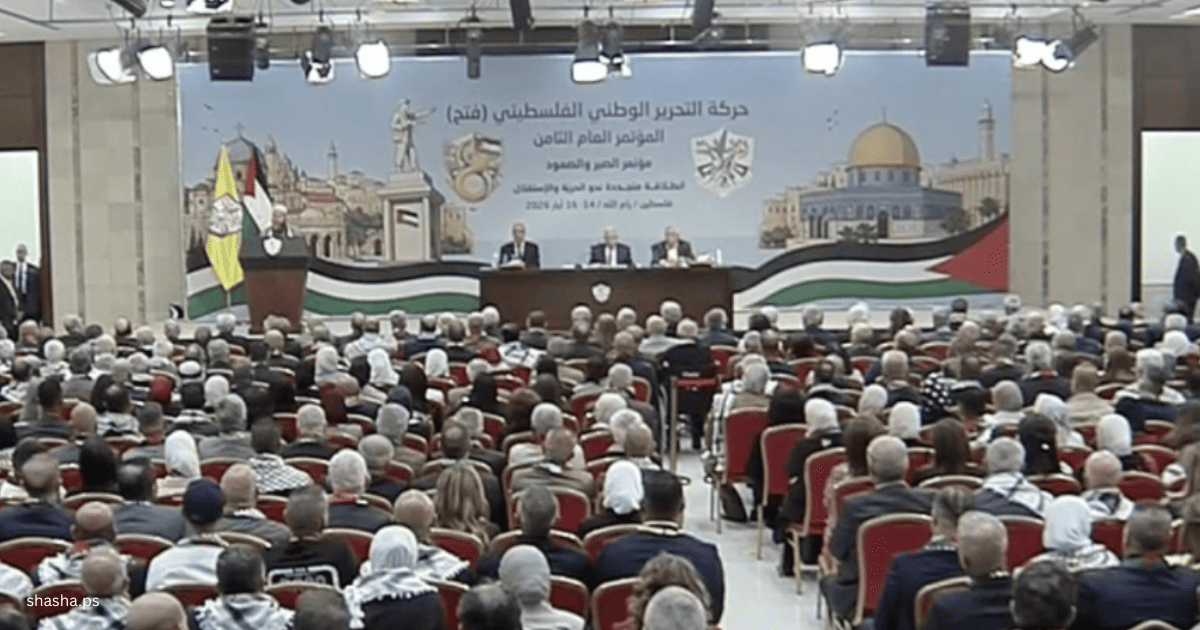

The chances of success for Fatah’s Eighth Conference depend on its ability to carry out a genuine and deep reassessment of its previous course and adopt a new path, rather than simply recycling the status quo. The main conditions for success can be summed up as follows:
First: Adopting a new political program after conducting a thorough critical review and drawing lessons from past experience. This includes rethinking the Oslo Accords, as well as the structure, role, obligations, budget, and resource allocation of the Palestinian Authority so that they serve the real priorities, needs, and interests of the people, not individuals or power centers.
Second: Reviving the PLO, taking it out of intensive care, and rebuilding it so that it truly becomes, both in word and deed, the sole legitimate representative of the Palestinian people in all their political and social diversity, and the highest political authority. The Palestinian Authority should function as one of its instruments, not “the daughter that devoured her own mother.”
Third: Separating Fatah from the Palestinian Authority so that Fatah can reclaim its role as a national liberation movement rather than remaining a ruling party. The continued overlap between the two has harmed both the movement and the political system alike.
Fourth: Not sidestepping legislative and presidential elections, and holding them as soon as possible. Restricting elections to the Palestinian National Council alone raises red flags and suggests an attempt to rig the outcome in advance, assuming elections are even held at all, by moving toward appointing most of the diaspora quota in the Council.
Fifth: Developing a plan for steadfast resilience based on a “resistance economy” rather than a free-market model, one that ensures the Palestinian cause remains alive and the people remain on their land. It should also embrace a form of popular resistance whose costs are sustainable, capable of rallying broad public support, and able to achieve tangible gains. In this context, boycotting Israel, imposing isolation and sanctions on it, and stripping it of legitimacy become especially important.
It is also important that voting at the conference be conducted by secret ballot, and even more importantly, that the vote counting be transparent and public in order to minimize, as much as possible, the likelihood of fraud.
Last but not least, one cannot ignore the fact that the conference appears to have been carefully engineered in a way many believe is designed to guarantee predetermined outcomes, or at best keep things exactly as they are. This includes the fact that several members of the preparatory committee, which was responsible for organizing the conference and selecting many of its participants, are themselves candidates for the Revolutionary Council and Central Committee. That represents a fundamental conflict of interest that undermines the conference’s legitimacy and integrity.
Even so, if the results turn out to be positive contrary to my expectations, I would be very pleased indeed.