
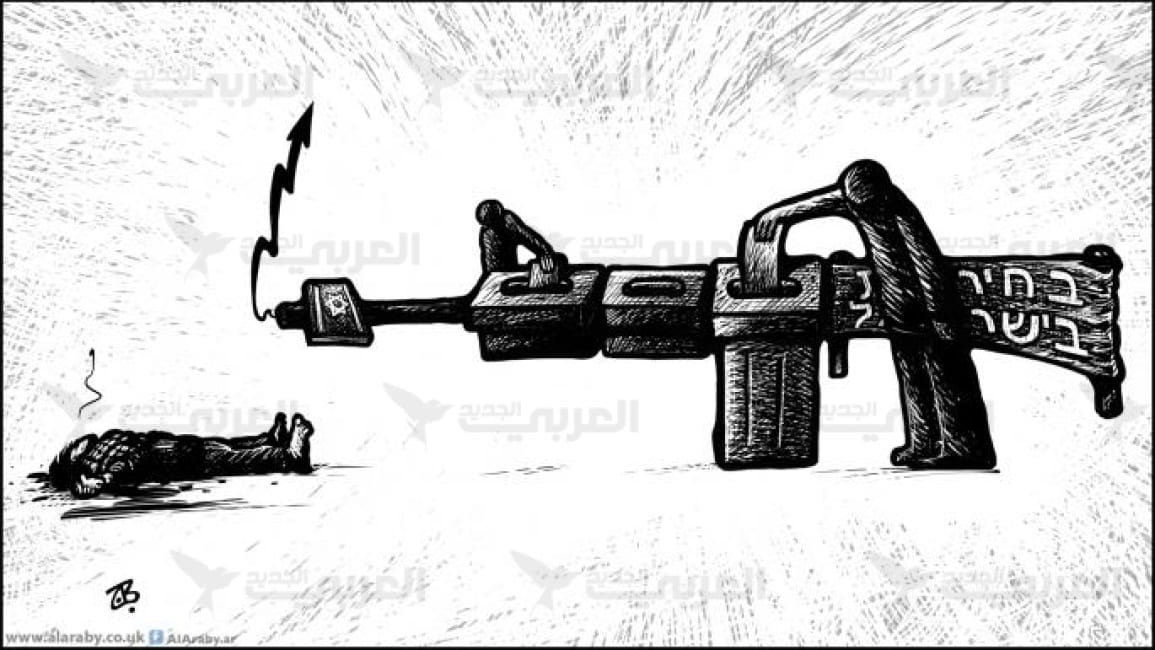

"Israel's elections are scheduled to be held on October 27, and their outcome will have major implications for developments in the region as a whole, and for the future of the Palestinian cause in particular," remarks Palestinian commentator Hani al-Masri on Tuesday's Qatari-owned, London-based, pan-Arab news portal www.alaraby.co.uk.
These elections come at an exceptional moment, as the U.S./Israeli war against Iran continues intermittently without a definitive outcome. The outcome of this war will have profound repercussions for the future of the region and the world, particularly for Israel, as it will shape its standing and role and determine whether it is capable of reshaping the Middle East in a way that cements its dominance, brings it closer to achieving the project of 'Greater Israel,' and liquidates the Palestinian cause in all its dimensions, or whether its failure will herald the beginning of a dramatic retreat from this project.
The map of political forces and camps indicates that several main blocs are competing in the elections, making it difficult to predict the outcome with certainty. Although current indicators favor the opposition, they do not guarantee that it will prevail. A surprise could come in the form of the Joint List or the two Arab lists winning more than 13 seats.
The first of these camps is the governing coalition, led by Likud and its leader, Binyamin Netanyahu, which formed the most extremist, aggressive, and racist government in Israel's history. Since its formation, even before October 7, 2023, it has adopted a program based on annexing the West Bank and has relied on two projects serving one objective: Liquidating the Palestinian cause.
The first is the Likud/Netanyahu vision, which focuses on undermining the PA and preventing the establishment of a Palestinian state. Therefore – barring serious U.S. pressure, which is far from guaranteed, since the Trump administration has not and will not support elections in which Hamas participates – it will not allow general Palestinian elections that would renew the PA's legitimacy, embody a unified Palestinian identity, and reunite the West Bank and Gaza Strip after the Israeli plan to separate them succeeded, and after colonial tutelage was imposed on the Strip through the creation of the Board of Peace to serve as the authority and governing body while excluding the PLO and the two rival authorities. The situation has been made even worse by the Palestinian division that has emerged and deepened despite the genocidal war. The second is the Religious Zionist project, which embraces a plan to 'resolve the conflict' and impose an Israeli solution by force, without negotiations or a political settlement. Previous Israeli governments failed to achieve this, and the same fate will befall the current government.
The government has intensified its policies against the Palestinians, driven by ideological, political, and electoral considerations, in the hope of achieving gains that would improve its chances of winning. Yet opinion polls indicate a major decline in its popularity, with the coalition expected to win only 49 to 51 seats, compared with the 68 seats on which it currently relies. This reflects the extent of the erosion in its popularity and standing.
On the other side, the opposition camp has emerged, led by Yesh Atid under Gadi Eisenkot, a former Israeli army chief of staff. His party has made significant gains in recent months, to the point of competing with Likud for first place and even surpassing it in some polls.
The opposition shares several common objectives, foremost among them removing Netanyahu, calling for an investigation into the failures of October 7, and rejecting the judicial overhaul, which it believes undermines the nature of Israel's political system. Its main weakness, however, is that it does not offer a genuine political alternative on security issues or the Palestinian cause. Rather, it differs from the current government more in method than in substance. A distinction must be made between two different scenarios within the opposition. If the next government is headed by Naftali Bennett, who stands to Netanyahu's right on many issues, a program will be adopted based on annexing Area C, which accounts for more than 60% of the West Bank, while granting Palestinians limited self-rule in Areas A and B under Israeli sovereignty. If, on the other hand, it is headed by Gadi Eisenkot, he appears more open to reaching political settlements as a means of achieving security arrangements, without supporting the establishment of a Palestinian state. He also supports maintaining the PA as an authority that administers the Palestinian population under Israeli sovereignty. This could open a window for new elections for the self-governing establishment, the release of some of the withheld Palestinian funds, and allowing some workers to return to Israel, thereby preventing the PA's collapse. He might also accept the PA's return to the Gaza Strip under less stringent conditions, unlike the Netanyahu government, which seeks to undermine it and strip it of its political and national substance. Indeed, some circles within the government are calling for its dissolution and replacement with local administrations.
In this context, Eisenkot adopts the outlook of Israel's military and security establishment, which believes that maintaining the PA serves Israeli interests, not only in the security sphere but also by perpetuating the political, legal, and demographic separation between Palestinians and Israelis. This preserves Israel as a Jewish state and helps limit its international isolation, which has worsened as a result of the current government's policies. A government headed by Eisenkot would also likely be more responsive to the 'deal of the century' proposed by Trump during his first term, which the Netanyahu government in power at the time did not approve. It would also be concerned with repairing U.S./Israeli relations, which have suffered a notable decline, particularly amid the growing shift in U.S. public opinion that is gradually being reflected among political elites in both parties. This is especially true of the Democratic Party, which is undergoing a major shift in favor of the Palestinians, reflected in the rise of figures who support Palestinian rights, call for halting arms supplies to Israel, support the establishment of a Palestinian state, and promote the slogan 'America First, not Israel First.'
Netanyahu may resort to inciting against Eisenkot by exploiting the ethnic dimension, claiming that his political experience is limited, that his party is newly established, inexperienced, and lacking cohesion, and that the premiership should not go to a Mizrahi Jew, given the dominance of Ashkenazi prime ministers since Israel's establishment. Nor can it be ruled out that he may seek to ignite a new war, if the Trump administration does not prevent him from doing so, thereby allowing the elections to be postponed. The difference is also evident in the presence of the Democrats Party, headed by Yair Golan, which is open to the idea of a Palestinian state, and to the possibility that the opposition could rely on the support of one or more Arab parties. However, the opposition will face major challenges because it contains far-right forces, such as the parties of Naftali Bennett and Avigdor Lieberman, in addition to settler pressure and the settlement-related, legal, and security realities imposed by the current government, which will be difficult to reverse. Despite this, removing the genocidal government and replacing it with an apartheid government is still a step in the right direction. Moreover, the course of the regional war so far confirms that the U.S. is in continued decline, that the old world order continues to collapse, that a multipolar world order is advancing, and that power has limits. The pursuit of objectives that exceed available capabilities, even by the world's greatest power and the region's most powerful state, ultimately backfires on those pursuing them.
Hence, despite the existential risks and challenges they face, the Palestinians still have opportunities that can be seized, whether the Netanyahu government remains in power or a government headed by Eisenkot takes its place. This requires taking the initiative to formulate a comprehensive national vision, bringing about profound changes in policies, performance, and leadership, reviving and rebuilding the unifying national institution on national and democratic foundations and through genuine partnership, and adopting new strategies suited to the current phase, without abandoning the major historical national rights and objectives rooted in the unity of the cause, land, people, and historical narrative.
But if a narrow, factional outlook prevails among the official Palestinian leadership, placing its own interests above the national interest and viewing Netanyahu's departure merely as an opportunity to revive the PA and guarantee its survival, without recognizing that maintaining the PA as it currently exists, as an administration of the population under occupation, is neither a desirable outcome nor an end in itself, then the same crisis will simply be reproduced and deepened, increasing the risk that the plan to liquidate the Palestinian cause at its roots will succeed. The goal must remain ending the occupation, achieving self-determination, and attaining independence, based on the Palestinian people's natural, political, and legal right to self-determination, and on the steadfastness of more than five million Palestinians in the West Bank and Gaza Strip and their determination to remain and struggle for freedom, supported by the Palestinian people inside Israel and everywhere else, and backed by broad international recognition of their right to self-determination.
"If Palestinian agency existed, it would be capable of transforming the deep predicament into a great opportunity," concludes Masri.
Translation and wording are adapted from a media source.